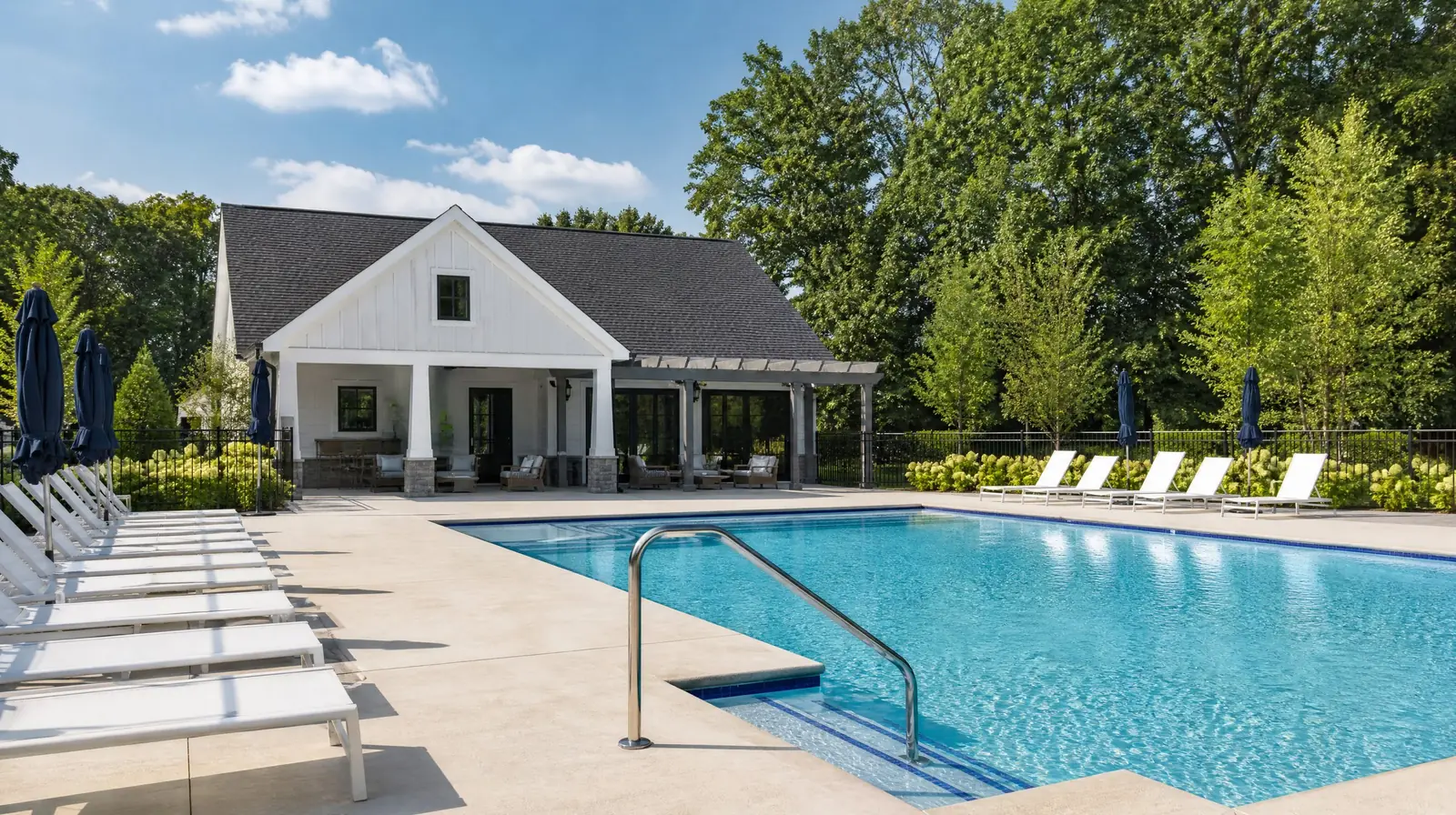
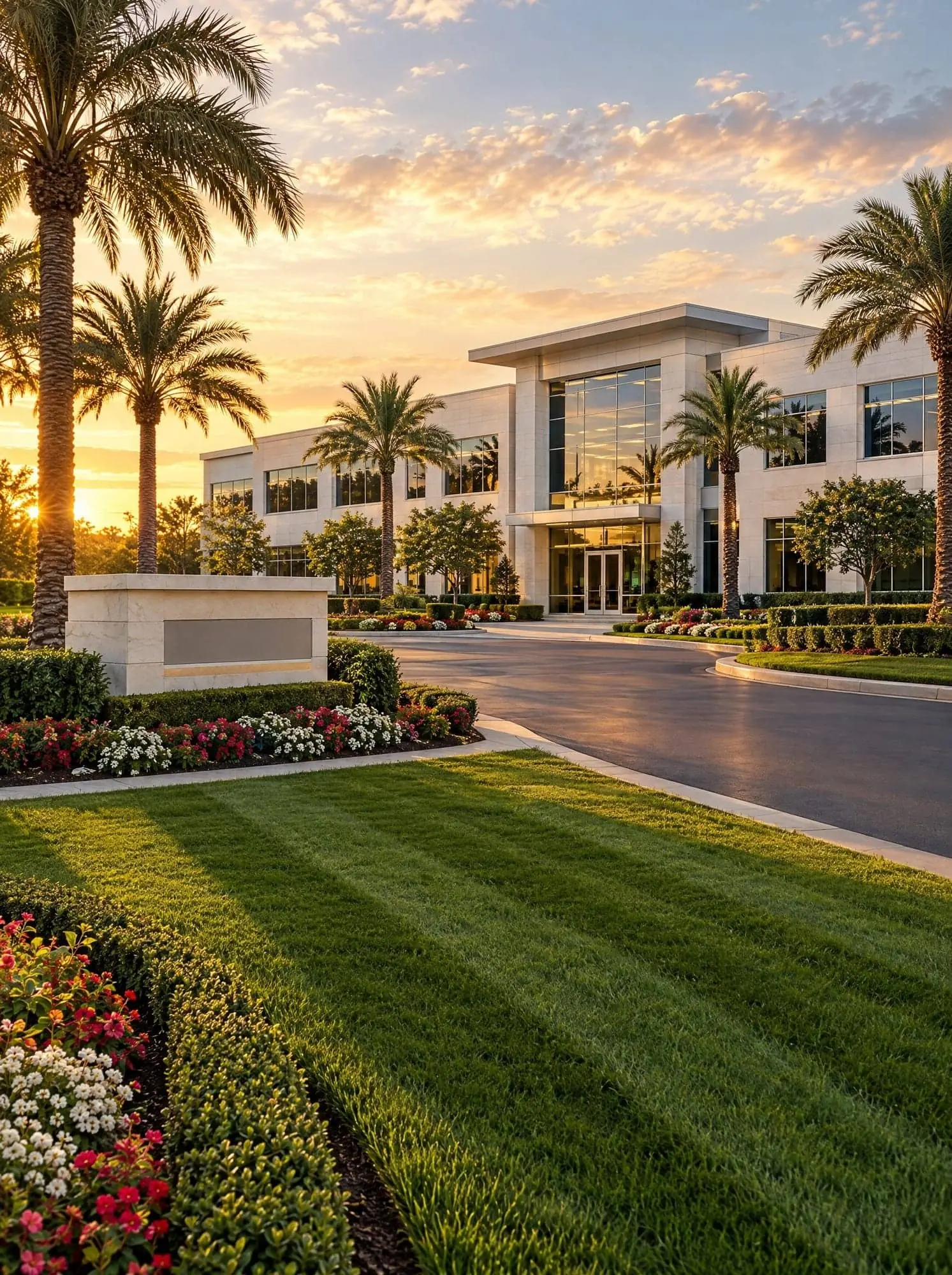
Entrances, sidewalks, clubhouses and building exteriors all shape how a community looks. Here is how boards can scope, schedule and communicate exterior cleaning.
Residents may not notice clean sidewalks, but they notice the dark streaks on the entrance monument, the green film on a shaded walkway and the stains around the pool deck. Exterior cleaning is one of the most visible things a community association can do, and one of the easiest to get wrong without a plan.
Pressure washing for a community (also called power washing or pressure cleaning) is a different job from washing a single home. There are more surfaces, more people to notify and more rules to follow. Here is what an HOA board or community manager should work out before booking, so the project goes smoothly and the results last.
What do HOA pressure washing services usually cover?
It depends on what the association maintains and what the homeowners maintain, so your governing documents are the place to begin. Common areas are usually the starting point, and many communities add more over time:
- Entrance monuments, signs, walls and fountains
- Sidewalks, curbs, gutters along the street and common walkways
- Clubhouses, fitness buildings, mail kiosks and pool decks
- Parking areas, dumpster pads and maintenance areas
- Building exteriors, roofs and breezeways in condo and townhome communities
If the association does not maintain individual homes, it can still make life easier for owners. Some boards arrange a date when residents can opt in to a house wash or driveway cleaning at their own expense, which keeps the whole street looking consistent.
Not every surface should get the same pressure
One of the most common mistakes is treating everything as a job for high pressure. Concrete can usually take a stronger wash, but stucco, painted siding, roofs, wood, pavers and natural stone need more care. Too much pressure can etch surfaces, force water behind siding or strip the joint sand from pavers.
That is why many building exteriors and roofs are soft washed instead, using low pressure and cleaning solutions that treat the algae and mildew at the source. Ask any provider how they would handle each surface on your property. If the answer is the same for all of them, keep asking.
How often should a community schedule exterior cleaning?
There is no single schedule that suits every community. Shade, moisture, nearby trees, irrigation and the local climate all change how quickly a surface comes back. Most boards do best with a simple rotation in place of a once-a-year scramble.
High-visibility areas such as the entrance, the clubhouse and the pool deck often earn more frequent attention. Sidewalks and curbs can follow a regular cycle, sometimes one section at a time, which spreads the work across the budget year. Building exteriors and roofs are typically longer-cycle projects. Have your provider walk the property, then build the rotation around what they find.
What to include in your scope of work
A clear scope makes quotes comparable and protects the board if questions come up later. Before asking for proposals, put these on paper:
- A property map marking each area to be cleaned, by section or building
- The surface type in each area, and any known problem spots
- Stain treatment for rust, oil and irrigation marks, if you want it included
- Where the crew can get water, and where equipment can park
- How wash water will be handled around storm drains and landscaping
- How the work will be documented, such as before and after photos
Asking each provider to respond to the same written scope is the simplest way to compare proposals fairly. It also makes it easy to see who has added something useful, and who has left something out.
Tell residents before the crew arrives
Most complaints about community projects are really complaints about surprises. A short notice goes a long way. Tell residents the dates, the areas being cleaned and what you need from them, then send a reminder a day or two before the work begins.
Be specific about what to do. Should they close windows on the side being washed? Move cars from a certain row? Take mats, planters and bikes off walkways? Keep pets inside? Also plan for pool hours and clubhouse access if the work affects shared amenities. The fewer things residents have to guess about, the quieter the project will be.
Think about water, drains and landscaping
Wash water has to go somewhere. Local rules on runoff and storm drains vary, so ask how the provider handles water on site and which products they use. A careful crew will also protect plantings, cover what needs covering and rinse landscaping around the work area.
Timing matters here too. Avoid scheduling washing right after a fresh coat of paint or sealant, and coordinate with your landscaper and irrigation schedule so sprinklers do not undo the work the next morning.
Questions a board should ask any provider
Boards answer to owners, so it pays to ask the same questions of everyone who submits a proposal:
- Can you provide a current certificate of insurance naming the association as required?
- Who is our single point of contact during the project?
- How will you handle each surface on our property?
- How will the work be scheduled around residents and amenities?
- What happens if a board member or resident finds a missed spot?
Your community manager will likely have its own vendor requirements as well. It is easier to share those at the start than to chase documents once the project has been approved.
Make exterior cleaning part of a bigger plan
Pressure washing rarely stands alone. The same community usually needs window cleaning, parking lot sweeping, grounds care and seasonal work, and each separate vendor adds another schedule, another invoice and another phone call for the manager.
Thoro Clean gives boards one point of contact for community exteriors. Tell us about your property and a vetted, insured Thoro Clean pro does the work. We keep the scope and schedule in one place and back the work with our 7-Day Guarantee. Request a quote whenever your board is ready to plan the year ahead.